
🕵️ Your Brain's Immune System Isn't Fighting the Implant. It's Listening to It.
Why BCIs Fail Series: Post 15

💥 The standard story about brain implants and immunity is simple: the immune system sees a foreign object, attacks it, and builds scar tissue. That story is incomplete. We found that microglia, the brain’s immune cells, aren’t just reacting to the device as a physical object. They’re monitoring what the device is doing to nearby neurons, in real time, and adjusting their behavior based on the neural activity the implant drives.
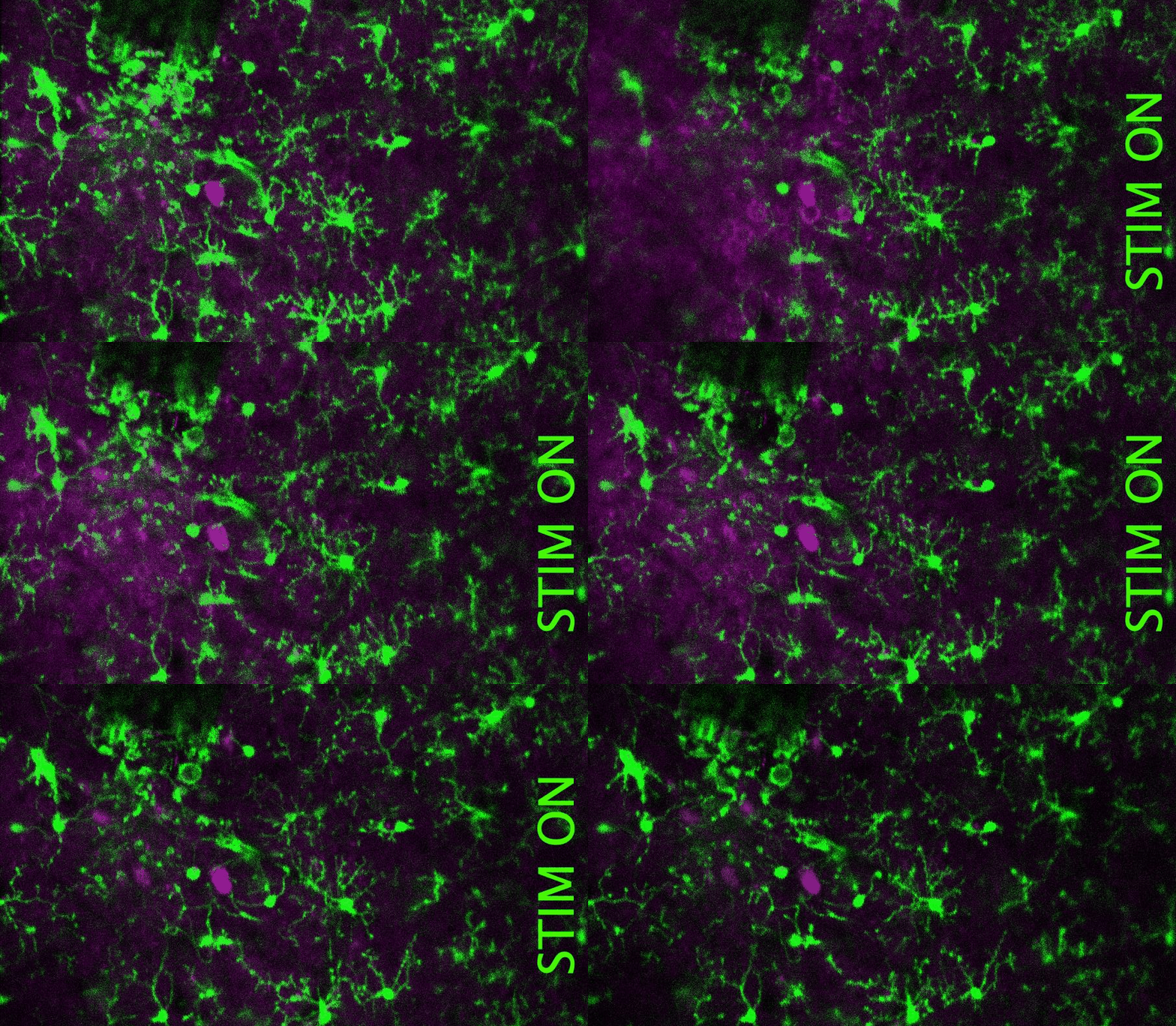
🔬 We delivered sustained electrical stimulation through implanted microelectrodes while imaging microglia in living mouse brain. During stimulation, microglial processes extended preferentially toward the neurons that were most active. Not toward the electrode. Toward the activated cells. The immune system was tracking which neurons were working hardest.
🤔 This is fundamentally different from the foreign body response described in Post 3. Scar-forming microglia react to the device as a physical object. These surveillant microglia were responding to the biological consequences of device operation. Two different immune behaviors, triggered by two different signals, operating simultaneously around the same implant.
⚡ The stimulation frequency mattered. At 10 Hz, microglia directed surveillance toward metabolically stressed neurons without triggering classical inflammation. Different frequencies produced different immune responses, a variable no current clinical stimulation protocol accounts for. The same device delivering different pulse patterns could create very different immune environments in surrounding tissue.
🔗 This connects the metabolic story running through the series. Neurons near the electrode are energy-deprived (Post 5). Blood supply is compromised (Post 13). Stimulation itself disrupts neurovascular coupling (Post 14). Now we’re seeing immune cells detect that metabolic stress and respond in real time. The immune, vascular, and metabolic systems aren’t separate problems. They’re one integrated biological response to a device that is both present and active.
🔧 This collapses the boundary between “biocompatibility” and “device function.” Designing stimulation patterns requires considering immune consequences, not just neural ones.
Microglia and stimulation: https://iopscience.iop.org/article/10.1088/1741-2552/ae4652
Immune response review: https://www.nature.com/articles/s41551-017-0154-1
#Neuroscience #Immunology #BrainStimulation #Neurotechnology #BrainComputerInterface