
🔊 Ultrasound Against the Foreign Body Response: What Sound Did to Microglia
Why BCIs Fail Series: Post 16

🔎 Every intervention my lab has pursued to improve BCI longevity has involved either modifying the electrode or delivering a drug. Both work to varying degrees, and both carry tradeoffs, new materials introduce new failure modes, and pharmacological interventions require systemic delivery with potential off-target effects.
❓ So we asked a different question: what if we could redirect the brain’s immune response using nothing but sound?
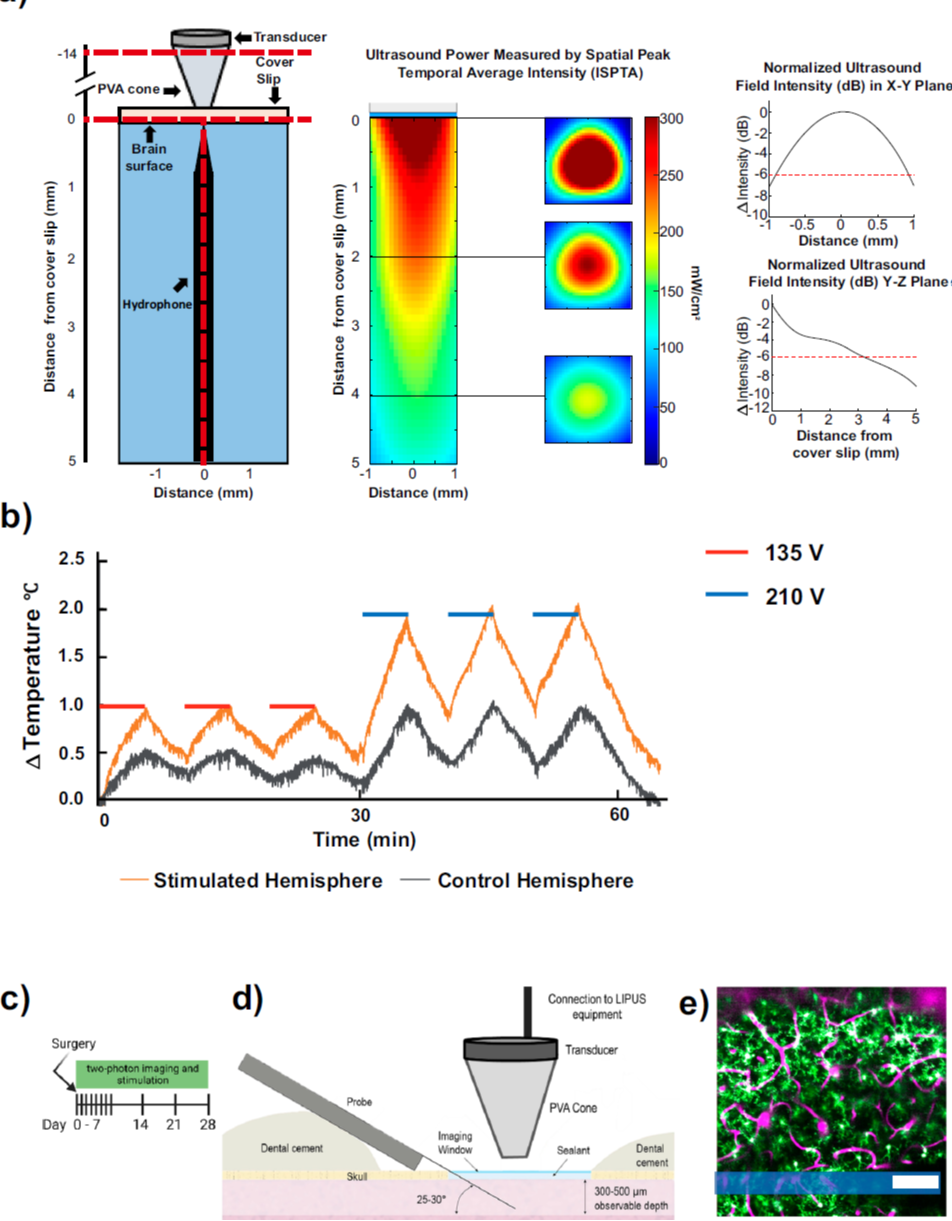
💆 Low-intensity pulsed ultrasound, or LIPUS, delivers mechanical energy through acoustic waves at intensities far below those used in therapeutic ultrasound. At these low intensities, LIPUS doesn’t damage tissue. What it does is alter cell behavior with a gentle massage, and in the context of brain implants, what it alters is microglia.
🛠️ Following electrode implantation, microglia migrate to the injury site and eventually encapsulate the electrode in a dense cellular sheath that impairs recording. Our question was whether LIPUS could shift microglia from encapsulation toward repair.
The answer, published in Nature Communications in 2024, was yes. In rats receiving LIPUS following implantation, microglial activation was substantially reduced, glial scarring decreased, and chronic recording performance improved measurably. LIPUS accelerated the transition of microglia from a reactive, encapsulating state toward a surveillant, tissue-remodeling state, nudging the brain’s immune response toward healing rather than walling off.
This connects to something from an earlier post: the frequency and pattern of electrical stimulation also shapes microglial behavior. Our 2026 work showed that 10 Hz stimulation causes microglial processes to extend preferentially toward metabolically stressed neurons without triggering classical inflammatory activation. Both LIPUS and appropriately tuned electrical stimulation converge on the same biological target. Two different physical mechanisms, one shared lever.
🩺 What makes LIPUS particularly significant is delivery. It can be applied non-invasively through the skull, administered to a person with an implanted BCI without additional surgery, as a post-implantation treatment or periodic maintenance intervention. This work is now being developed toward clinical application by Actuated Medical. The path from rodent to human is long, but the biology is sound and the delivery approach is clinically tractable in a way that electrode-level interventions often are not.
Ultrasound: https://lnkd.in/g9Zz-TNi
Electrical: https://lnkd.in/e38qd6hN
#Neuroscience #Neurotechnology #Ultrasound #BrainComputerInterface #Bioengineering